Posts

Showing posts with the label History

Nothing new under the sun
Image
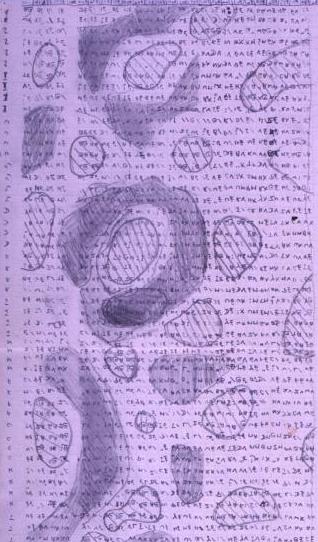
Traditionally autumn symbolises the harvest, and also the reaper. The reaper may be grim, but may also be the reaper of knowledge. Autumn is a time of reflection and introspection. Nature’s death drive reigns in my mind this season, not only because of the shedding of leaves, but also because of the faint rumbling sounds from distant parts of the earth. The seasonal shift flummoxed me as I struggled to explain: “It happened in autumn, that is to say spring. Autumn/spring is a time of natural violence. The shedding of leaves/birth of new lambs scribble scribble cross cross. I dunno nothing is certain anymore. With time and distance this looking glass tomorrowland, my homeland in fact, seems less and less real.” No matter how anachronistic our world is, the grinding force of narrative prevails to give structure to human thought. We can’t know if other animals do this so we assume they don’t (or prefer to think that we’re alone). Even if they do we can’t ever know if narrative has the...

Filaments of the Dead

Before one can tell the story of Milton Keynes, one must tell the story of Bletchley. The unlovely name means ‘Blaecca’s clearing’. Neighbouring Fenny Stratford is no less prosaic: the Latin strata is the most literary constituent of the name, most likely referring to Watling Road, which stretches from Dover to the Roman city of Chester. Ford refers to a river crossing, and Fenny means that the area was, well, fenny, muddy and flat. Following much the same history of the rest of South West England, Bletchley’s main redeeming feature is that it is roughly halfway between London and Birmingham, Oxford and Cambridge. For an understanding of Bletchley’s preindustrial history one must consult the modest books that are easily missed next to brassier titles such as Colossus (!) and Station X (!!). Local rector F.W. Bennitt’s prosaically named Bletchley is a gem filled with passages about local industry, entertainment and even a compendium on local dialect. Written in the mid thirties, it ...

Britain's farm

Image
Evidence of Britain’s colonial past can be found in any English supermarket. The wares of her former colonies jostle for your attention, and there nestled between the more exotic Tikka Massala paste and Jamaican Jerk sits the humble packet of Anchor butter. New Zealand long regarded herself as Britain’s farm. Despite the huge distance, our connection with the Mother Country was strong from the very beginning. We invented refrigerated ships to facilitate it. Most of all I think our export of butter and cheese to Britain after the war was a great source of pride for our country; just imaging the pleasure it brought people after years of rationing, a little dollop of happiness on every meal. These were the sunset spoils of empire. Now the things that stock British supermarket shelves are more likely to be made by people named Pierre and Giovanni than Kevin or Trev. Every New Zealand schoolchild knows the year Britain joined the EEC: 1973. It was a bitter betrayal. After that, we had...